
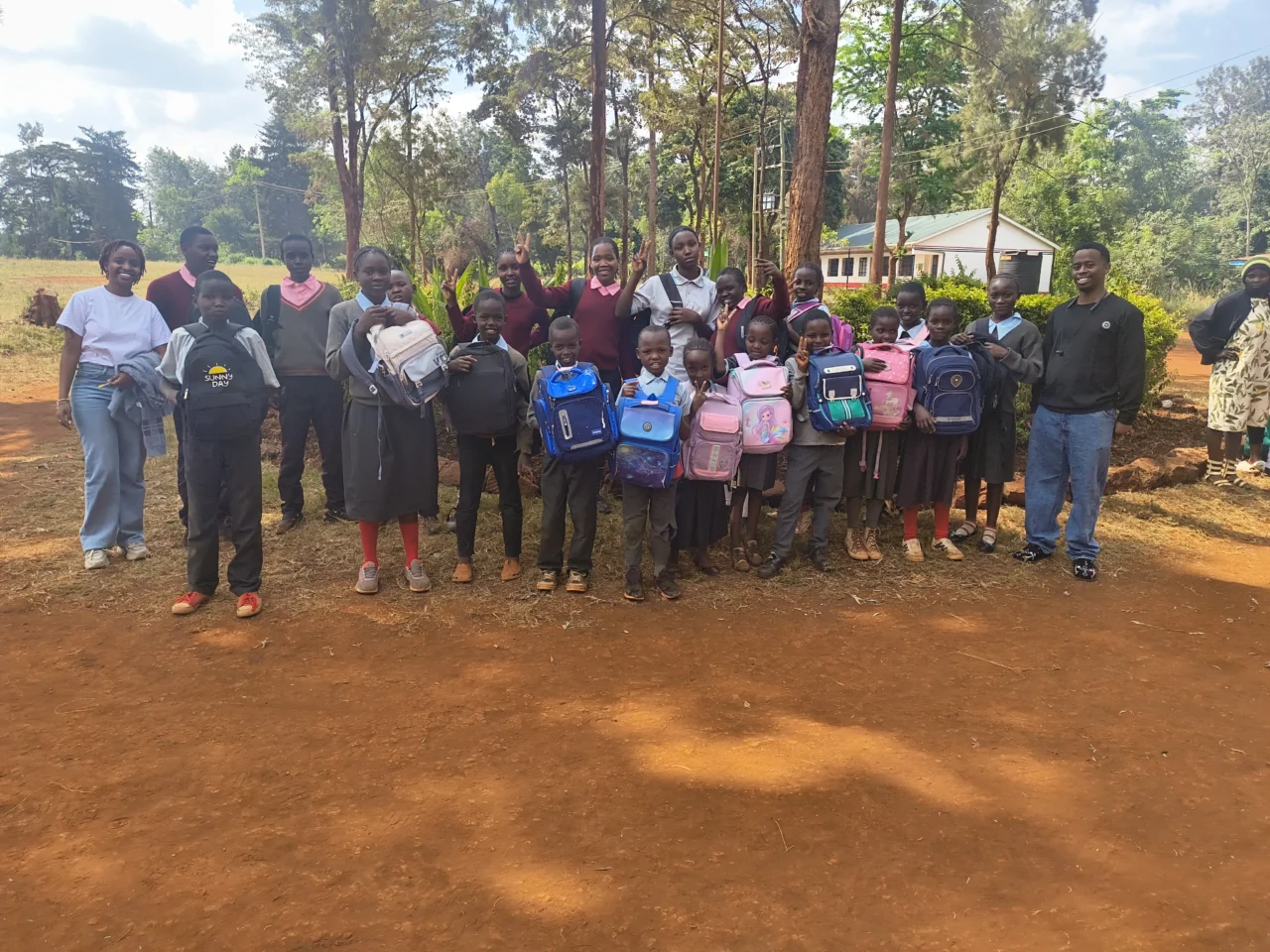
A child’s school day begins long before the classroom door opens. There is breakfast to find, a uniform to prepare, a journey to make and someone at home balancing the costs. When money is scarce, these ordinary requirements can become difficult choices. The challenge is rarely a lack of ambition. It is the gap between what children need and what their families can consistently afford.
Kenya is home to resourceful families, committed teachers and strong community networks. It is also a country where opportunity is uneven. Children’s circumstances differ across neighbourhoods, counties and households. An honest account must recognise both hardship and progress, without presenting every Kenyan child as vulnerable or every family as powerless.
This article brings together national data, research and practical questions for supporters. It focuses on young children while explaining how early disadvantages can continue into the school years. Figures describe the populations and dates in the cited sources; they are not results measured by The Impact Circle Kenya.
1. Poverty is more than a shortage of money
In its December 2025 Child Sensitive Snapshot, UNICEF reports that 42.4% of children in Kenya lived in monetary poverty in 2022, while 47.7% experienced multidimensional poverty. The second measure considers overlapping deprivations in essential areas such as education, health, water and sanitation. These percentages describe different measures and should not be added together.
The distinction matters. Paying a school bill may address one barrier, while a household still lacks reliable food or safe water. A family may also have access to one service but struggle with another. Looking only at income can miss what daily life actually requires.
For a small initiative, the practical lesson is to ask before deciding. What prevents this child from attending consistently? What support already exists? What does the caregiver consider most urgent? A useful response starts with those answers rather than a standard package chosen far away.
2. Uncertainty makes everyday decisions harder
A family budget is more difficult to manage when earnings fluctuate. A quiet week at work, an illness or an unexpected household expense can disrupt plans for school materials and meals. These examples illustrate why timing matters; they are not a description of any named family or a claim that every household faces the same pressures.
The World Bank’s October 2024 Kenya Poverty and Equity Brief documents how the pandemic reversed earlier poverty reductions and affected urban and rural households differently. It provides an important reminder that wider economic shocks can unsettle family finances, even after periods of progress.
Support therefore needs realistic commitments. A caregiver should know whether help covers one purchase, one term or a longer period. Clear boundaries are more respectful than an impressive promise that an organisation cannot reliably keep.
3. Access to school involves more than tuition
For US readers, “K–12” is a useful starting point, but Kenya has its own education stages. Our guide to Kenya’s school system explains primary, junior and senior school. Public education support does not mean every cost associated with attending school disappears, and private-school tuition must be distinguished from other expenses.
Evidence shows why apparently small costs deserve attention. A 2021 study in The World Bank Economic Review examined a uniform-distribution programme in Kenya. Receiving a uniform reduced absenteeism in the study, but researchers found no evidence of sustained effects on the highest grade completed or primary completion eight years later.
That finding supports a careful conclusion: removing a material barrier can help participation, but one item cannot guarantee long-term educational success. Today’s prices and school requirements must also be checked locally; historical research costs are not a current shopping list.
4. Being enrolled is not the same as learning
A child can have a place at school and still need help developing foundational skills. Attendance, classroom teaching and learning progress are related, but they are not interchangeable measures. A programme that counts only bags distributed or fees paid cannot assume it has measured educational improvement.
The World Bank and UNESCO Institute for Statistics’ April 2024 Kenya Learning Poverty Brief estimates learning poverty at 79%, using the available assessment and schooling data. The indicator concerns reading proficiency at late-primary age, adjusted for children outside school. It is not a new test of every Kenyan child, nor a label for a particular learner’s ability.
For supporters, the useful question is what happens after access improves. Families and educators can help identify whether a learner needs additional classroom support. Donors should welcome that nuance instead of expecting supplies alone to solve every difficulty.
5. Nutrition begins shaping opportunity early
The 2022 Kenya Demographic and Health Survey found that 18% of children under five were stunted, 5% were wasted and 10% were underweight. These indicators describe different nutritional conditions; they should not be combined into one total. Stunting reflects low height for age and is associated with chronic undernutrition.
The survey also records progress: stunting declined from 40% in 1993 to 18% in 2022. Reporting that improvement matters. Kenya’s challenges are serious, but they are not evidence that action is futile. National averages also cannot tell us the nutritional condition of the children in a particular photograph or school.
Food support should be planned with caregivers and appropriate local expertise. A community initiative must not diagnose malnutrition from appearance or imply that a meal replaces professional assessment and treatment.
6. Food support needs more than a calorie count
What children eat depends on more than whether food is present. UNICEF’s June 2025 analysis of food systems for children in Kenya examines how food systems influence the diets of children and adolescents, including gaps that contribute to malnutrition. It encourages attention to children’s specific nutritional needs rather than treating every household food purchase as equivalent.
For a local project, that means asking practical questions about age, dietary needs, preparation, storage and reliable delivery. Families should help shape arrangements instead of receiving assumptions about what they eat. Buying locally may be appropriate, but suppliers and food safety still need consideration.
A celebration meal can offer joy and recognition. It should not be described as solving ongoing food insecurity. The purpose of a family dinner award and the purpose of sustained food assistance need to remain clear.
7. Safe water and sanitation are part of childhood opportunity
School support does not exist in isolation from basic services. UNICEF’s Kenya water, sanitation and hygiene programme overview describes the importance of safe water, sanitation and hygiene for children, and the need for facilities that consider gender and disability. Its historical programme figures should not be mistaken for a current count of every community’s needs.
For families, a practical assessment can include whether a school has usable toilets, handwashing facilities and accessible water. These questions are relevant even when an organisation’s budget concentrates on school fees and supplies.
A small charity does not have to offer every service itself. Recognising a need, discussing it respectfully with a school and finding an appropriate partner may be more responsible than promising a water project it cannot deliver.
8. Drought and flooding can deepen existing hardship
UNICEF’s July 2025 Climate Landscape Analysis for Children in Kenya examines how droughts, floods and environmental pressures affect children’s health, education, protection and essential services. It highlights unequal exposure, particularly in arid areas, rural communities and informal settlements.
The report helps explain why education support needs flexibility. A plan made at the start of a term may need to change when local conditions disrupt travel, household resources or services. That does not mean every missed school day is climate-related; individual circumstances still require verification.
Supporters should ask how a programme responds when circumstances change. Can purchases be rescheduled? Who checks local conditions? How will families and donors hear about adjustments? A transparent change of plan can be a sign of responsible management.
9. Some children face additional barriers to inclusion
Poverty can intersect with disability, making a standard approach insufficient. The African Population and Health Research Center’s October 2026 brief on inclusive early learning in Kenya draws on a scoping review and a qualitative case study in Matuga, Kwale County. It identifies gaps in recognising developmental needs and connecting learners with appropriate support.
This is valuable local evidence, not a national prevalence estimate. It suggests that offering the same item to every child does not necessarily provide equal access. Families may need accessible communication, suitable materials or referral to qualified services.
Our practical recommendation is to ask about access needs without demanding unnecessary personal details. Children should not have to make their private circumstances public to be considered worthy of help.
10. Dignity must guide the way we tell these stories
Research can describe hardship without defining a child by it. A photograph does not reveal a household’s finances, a learner’s health or their family history. Organisations should avoid adding those assumptions to an image because they make a more dramatic fundraising appeal.
Our editorial approach is to separate verified facts, illustrative images and future plans. We recommend appropriate caregiver permission and the child’s agreement before publishing an identifiable story. A family should understand where an image may appear and whom to contact about its use.
Children also deserve stories about curiosity, friendships, effort and achievement. Recognition should celebrate their agency. It should never require a child to perform gratitude or disclose painful experiences to satisfy a donor.
11. What thoughtful support can look like
The evidence points toward a practical starting point: understand the barrier, choose an appropriate response and keep checking whether that response remains useful. This is a recommendation for programme design, not proof that any particular organisation has achieved an outcome.
For school support, request current documentation and clarify which costs are covered. For supplies, confirm what the school actually requires. For food, agree on arrangements with the family. Across all three, keep records and avoid promises of guaranteed academic progress or lifelong income gains.
Accountability can be simple without being vague. Supporters should be able to distinguish the campaign target, money received, fees deducted, spending completed and help delivered. A planned budget is useful, but it is not an expenditure report.
12. A role for supporters in Kenya and the United States
Support can begin with listening, an introduction or practical local knowledge. Kenyan families and educators understand details that a distant donor may miss. Supporters in the United States and the diaspora can contribute resources and relationships while respecting that expertise.
The Impact Circle Kenya is preparing a campaign around school assistance, supplies and food, with a $25,000 USD target. Its allocation remains illustrative while Maureen confirms programme details. Donation processing is not yet connected, and no tax-deductibility claim is being made.
Our Student of the Month plan adds a different kind of support: recognising a learner and sharing one full dinner with their family. Selection and delivery arrangements are still being finalised.
To learn more, explore the support priorities, review the funding plan or contact Maureen. A fairer start is not built by one promise. It is built through informed decisions, respectful relationships and support that follows through.
Research note: this explainer links to the original sources alongside the relevant findings. Studies use different years, populations and methods. The article is not a clinical assessment, an eligibility decision or a report of outcomes achieved by The Impact Circle Kenya.